

Three Questions With Steve Roach
Next up in the three questions series is legendary composer and performer Steve Roach! Steve first gained recognition with his 1984 minimalist album, Structures from Silence. His discography spans multiple styles, including Berlin School electronics, tribal ambient inspired by the Australian outback, and dark ambient soundscapes exploring themes of physical and psychological space.
This interview comes before his Los Angeles Age of Reflections performance of which Synth History is co-presenting!
Saturday, June 6, 2026
Immanuel Presbyterian Church
6:30pm; 8pm-10pm (performance)
Without further ado…


Synth History: What are some of your favorite pieces of gear of all time?
Steve Roach: The Oberheim Xpander is my life time instrument. Like any soul-quenching instrument, the integrity and emotional impact of the sound is number one. The range from delicate to visceral is all there, pure emotion. The matrix patching is a vital part of the architecture that makes it timeless. I have performed nearly all concerts since 1984 with its sonic presence with me. The patch matrix concept of the Xpander was brought into the ASM Hydrasynth, this for me is a current new gen favorite.
I just acquired the ASM Leviasynth; I can see and hear this finding its place in the lifetime list for the same reasons. After just two weeks it's earned its place here.
The long-time list is the Nord Lead 2X, 3, and 4. The Nord 2X along with its predecessors offer the ability to build multi complex 4 part patches with a wide range of timbral diversity and again the emotional impact I can carve out is core.
Back to the Oberheim: I managed to sell my soul back in the early 80s-expensive-for the OBX-A and then moved to the OB-8 that's still here. Because of its size it's too much to take out live for concerts. It's here in the studio but its new brother or sister in the form of the OBX-8 rack-suitcase friendly-is perfect for the live set up. It gives me the classic OB sound, like Structures from Silence for example. The list can go on, any synth head knows the addiction.
Synth History: Can you recall one of your most favorite memories from either recording in the studio or playing live?
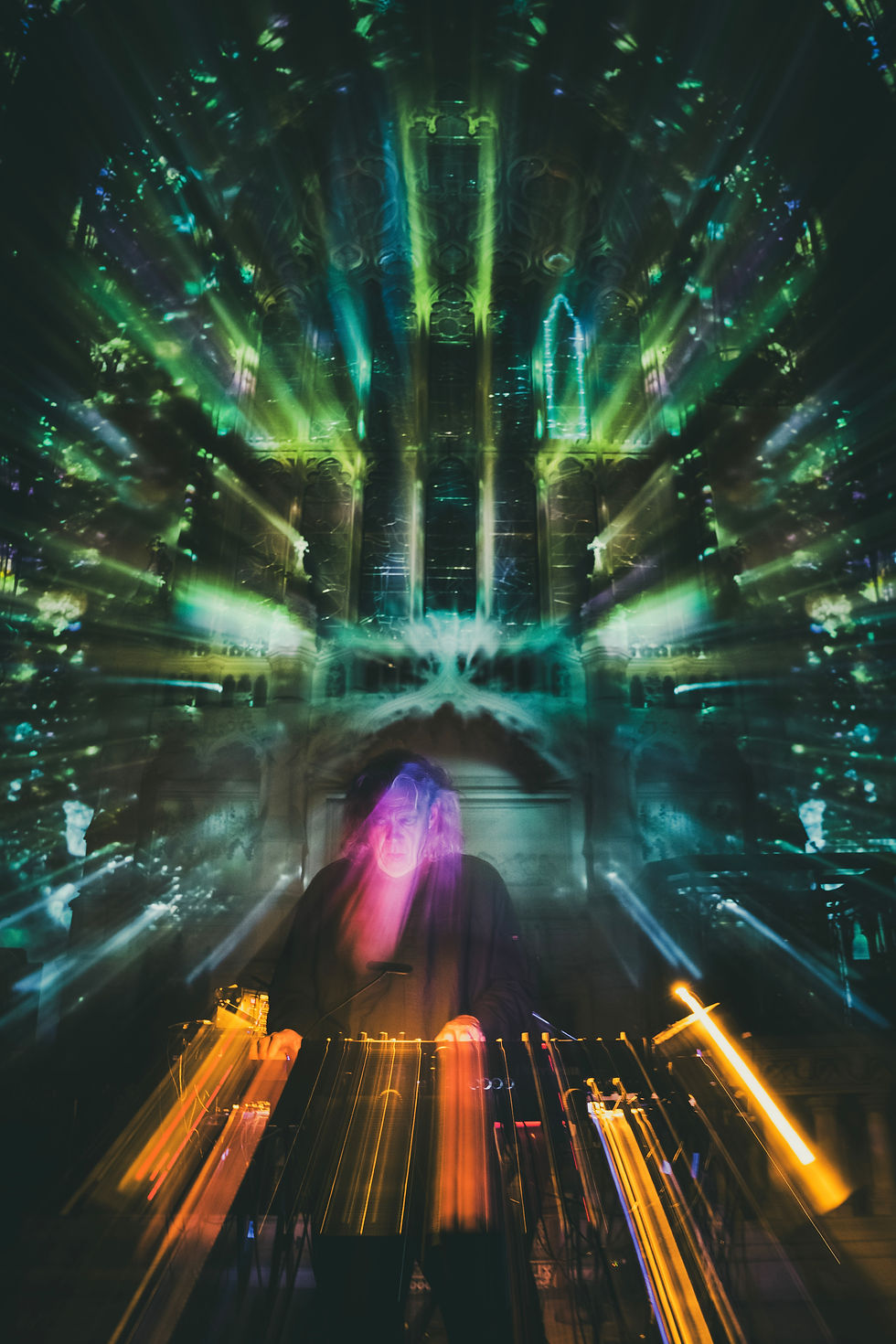
Steve Roach: Performing in surreal environments like the 700-seat concert space at Jameos Del Agua on the Canary Island of Lanzarote is high on the list. All the gear had to be lowered into the cave with a crane boom. Incredible feeling to be immersed in this womb-like space and the music being held and hovering within the space and audience.
Synth History: Technology has obviously changed a lot over the years! From the invention of MIDI to being able to take a DAW with you everywhere and access endless plugins. Do you think technology is always beneficial when creating art or are there caveats?
Steve Roach: The options at this point, beyond endless, freedom of choice! From one laptop to the extreme opposite, this is where I dwell with my setup both live and in the studio. M
Live I use no soft synths or DAWs. In the studio I split between recording live to a high-resolution Tascam DA 3000MK2 and go to DAW for the recording and arrangement, editing, and so on. Both live and studio is all is centered on hardware gear and rack FX, like synths including my lifetime Xpander. The vital center piece of my live rig is the 32-channel analog board. This is as much as a hands-on instrument as any hardware synth in my setup for hands on carving, shaping, and mixing all aspects of the live experience. Technology is not beneficial, it's essentially where I live. I just shared a bill in concert with William Basinski a week ago. We both did solo sets, William ― one laptop and and a small analog reel-to-reel for looping ― and then my set up of a 32-channel board, six hardware synths, analog sequencer, and hardware FX rack. In the end it's about the experience, both sets were impactful, deeply emotional on many levels, and polar opposite in approach with our chosen technology.

Synth History: This is a bonus question! I read that when you briefly lived in Hollywood you worked at the Licorice Pizza record store alongside Matt Groening! Can you tell me about working at the record store and what the music scene was like then?
Steve Roach: Historic moments at the crossroads of so many genres of music and culture blowing up and melting down, this deserves to be a few chapters in a book without question. I arrived in LA late 1979 to pursue my electronic music dream. A close friend and musician collaborator was the district manager of the SoCal Licorice Pizza chain. I dropped right into the maelstrom of LA's music scene with this Licorice Pizza location. It was on Sunset Blvd directly across from the Whisky A Go Go and two blocks from Tower Records. Rudy Sarzo of Quiet Riot was cooking up burgers at McNaturals a few doors down, and the famous Book Soup book store featured in the movies at the time next door. I performed a synth set upstairs at the time and at some hipster stores on Melrose and with numerous settings all over LA and the Valley.
Matt Groening had also recently arrived from Portland and we would share shifts on Friday nights when all hell would be erupting in the area on Sunset. Punks lighting the Licorice Pizza dumpster on fire and sending it down hill on San Vicente Blvd was a normal night. The Whisky spillover… punk, hair metal, new wave would be coexisting every night, in and out of the store. Matt was doing the Life in Hell series at the time in the LA Weekly. A trip to the employee bathroom would mean new a Binky the Rabbit post on the wall with words of wisdom for the day being shared. On any given night, names we all know, John Carpenter, Timothy Leary, Robin Williams, Blondie, Randy Rhoads, The Cars... the list goes on and on. The manager, first name Kevin, was was UK import and had come directly from managing a Virgin record store in London. Store staff meetings would occur at Barneys Beanery down the street at bit, you can imagine how those ended up.
See you at Steve’s LA performance! More information can be found here.
Synth History Exclusive.
Photos provided by Reflections by Joseph Buscarello.
Interview conducted by Danz.


