
Interview With Johnny Jewel
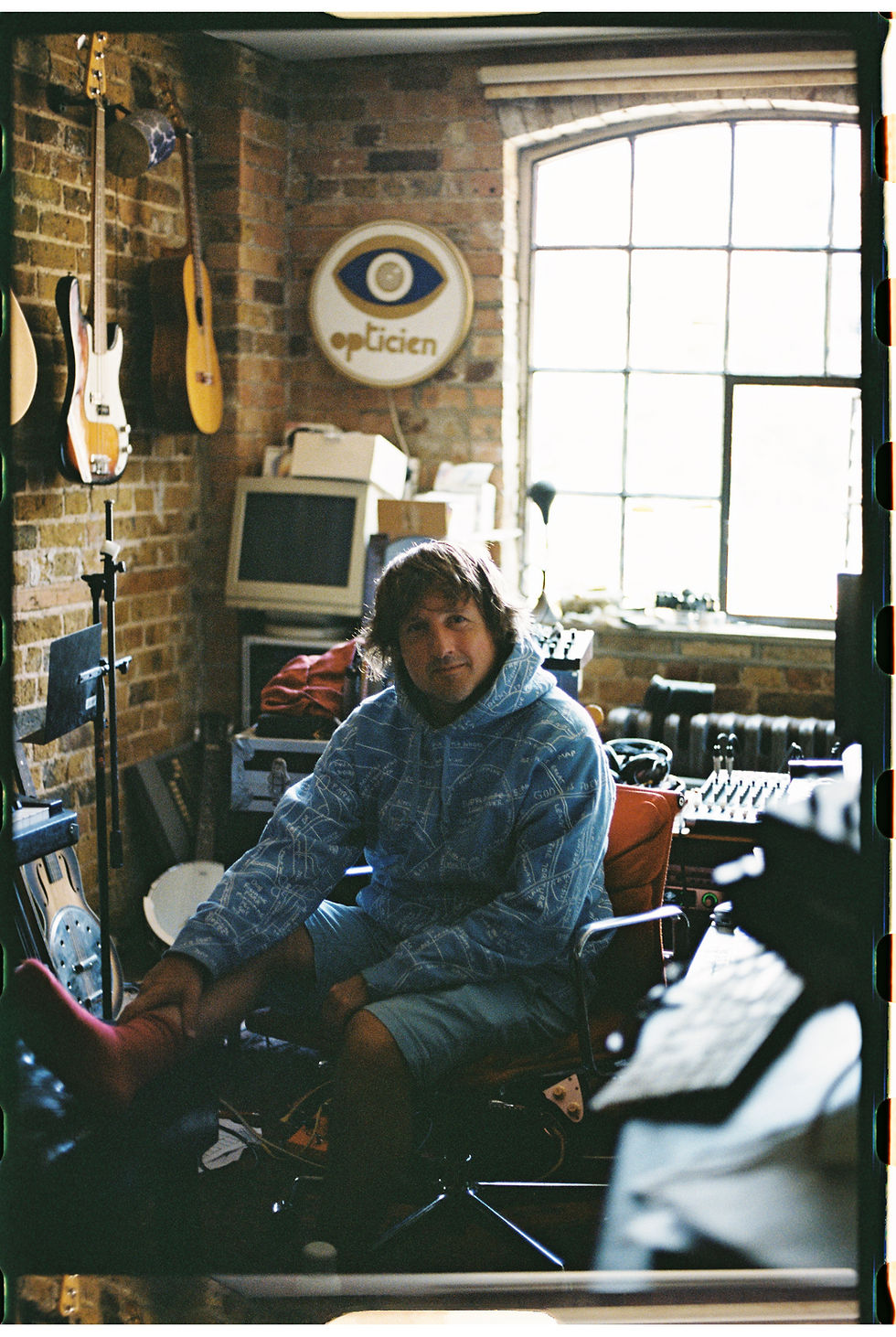
The legendary musician, record producer, composer, visual artist and founder of the Italians Do It Better record label, Johnny Jewel was kind enough to answer some questions for the zine.
We talk about the early days, founding the label, composing and more.
Photos by Andrea Riba for Synth History.
Without further ado...


Synth History: What music were you listening to growing up?
Johnny Jewel: The first few years of my life, I was immersed in Christian music. We only had a handful of Gospel records, Southern Baptist Country albums, & the Colonel Sander's Christmas record. By the time I was in kindergarden I got my first record player. It was a General Electric crimson Show N Tell Picturesound. A television-like box with a turntable on top with an accompanying slide show. This forever blurred the imaginary lines between sound and vision for me. My favorite records were The Legend Of Sleepy Hollow with Rip Van Winkle on the B-side & Hansel & Gretel. Also in heavy rotation was a Halloween record of eerie sound effects. I didn't have personal access to secular music until I started riding the bus to school in first grade. My mother bought me a radio alarm clock to help me get up early for school. That's when I first heard Joan Jett, Blondie, and Gary Numan, courtesy of Houston's 104 KRBE. I couldn't believe or comprehend what I was hearing, but I was hypnotized.
In 1982, we got our first color television: a wood-paneled Zenith console that came with a free trial to cable. Suddenly, I had MTV. This was the first time I saw what these musicians looked like. That same year, my older brother was able to persuade his high school funding program to buy him a Juno-6 for band. This was the first synthesizer I ever touched. He taught me how to play the octave basslines in Journey songs on my left hand while cascading the melody with my right. Soon after through BET I discovered UTFO, Whodini, Fat Boys, and Kurtis Blow. I was hooked. I stayed glued to 102 Majik FM taping the Roxanne Shanté wars and Grandmaster Flash. By the time I got to highschool, I fell in love with a British girl. Her older sister brought back cassettes from London. This is how I discovered The Cure, Depeche Mode, and The Smiths. I found a Minor Threat tape on the floor of the mall food court and that introduced me to Punk. All this lead to straight to the Velvet Underground, Joy Division, Yoko Ono, The Judy's, Camper Van Beethoven, Eno, Jandek, Kate Bush, and Talking Heads. That was my highschool soundtrack while painting every night.


Synth History: When did you start making your own music?
Johnny Jewel: When I was 14, I was skateboarding in Houston alone. The sky opened up and a huge rain storm came crashing down. I raced inside a nearby Goodwill to wait for it to pass. I was in there looking at the LPs when I saw an acoustic guitar. It was 15 dollars. I had never played guitar before but was compelled to get it. I didn't realize it was missing strings, so I taught myself to play on four strings like a bass. None of my friends played music, so I had no one to ask what you are supposed to do. I immediately starting writing lyrics and primitive musical ideas. I can't read or write music down, so I began recording my ideas onto a cassette to document them. It wasn't long before this felt limiting, so I starting using two tape decks to layer parts. At the time I thought I was the first person to ever think of this. I was so completely unaware of how music worked or how recordings were made. I loved music so much, but it was such an abstract art form to me that I knew nothing about. In my perception, there was a fused ocean of sound and a vocalist skimming across the surface. I never gave much thought as to how it was created, or the architecture inside of it. I was more focused on the feeling of music.
After I started playing guitar, I heard The Smiths masterpiece The Queen Is Dead. As I was listening to it, the layers started to separate and emerge. This was the first time that I noticed individual instruments working together. My mind was completely blown and I've never heard music the same since. My obsession with recording grew, and I decided I needed the ability to record more layers of ideas.
I was shelving milk at a Kroger grocery store in Houston and had saved up enough money with my friend to buy a 4-track. We bought a Yamaha MT-120, which I still have and use today. Through the Velvets, John Cale was my gateway into moderninst composition and musique concrète. I soon discovered Karlheinz Stockhausen, John Cage, Morton Feldman, and Jandek. This all lead to me making my first 2xLP in Austin between 1994 and 1995, after my father died. This Skin Is Rust was released anonymously in the era of Corpus Hermeticum, Majora, Corwood, Ecstatic Peace, Siltbreeze, etc. The noise scene had an immense impact on me and still does. At the same time, I was obsessing over Lync, Palace Brothers, David Berman, Smog, Unwound, Beat Happening, Slant 6, Jonathan Fireeater & Bikini Kill. These bands inspired me to move to the Pacific Northwest, where I would form Glass Candy with Ida No in Portland.


Synth History: Can you tell me about founding the Italians Do It Better record label?
Johnny Jewel: After moving to Portland, I started self-releasing Glass Candy seven inches through loans where I worked. The new grocery store I worked at had it's own credit union. They would take fifty dollars out of my paycheck each week until the seven inch manufacturing was paid off. At the time I was making $4.25 an hour, so being able to press my own vinyl was a dream come true. Those early seven inches got some indie label interest in Olympia as well as the East Coast. I ended up releasing on Vermin Scum in Baltimore and Troubleman in New Jersey.
By 2005, I had done three Glass Candy seven inches, three 12 inches with Troubleman, so when my other band Chromatics needed a home for the Nite EP, I decided to release it there. It was obvious to me this sound was the future and I was so excited about this Chromatics EP I had made. Unfortunately, it fell on deaf ears and got lost in the shuffle of the million other unrelated things that were coming out. The TMU label ethos were punk, very loose and DIY which I loved. I very much appreciated that Mike gave me full creative control, but there was a lack of overarching vision and consistent quality control for the rest of the releases.
Meanwhile, back in Portland, I was building the Farah project, Mirage, and starting to explore solo electronic film score. I didn't want these new projects to fall under the radar and get lost like the Chromatics record did. I decided to leave Troubleman and start self releasing again. I wanted to make a label solely focused on what I was making in my warehouse studio at 3 AM. A permanent uncompromising home for my bands, my writing, my producing, and creative direction. All under one roof. This way, fans of Glass Candy could discover Chromatics and Farah directly through the new label.
I met up with Mike in New York in the summer of 2006 and told him I was leaving. He was very cool about it and offered me an imprint under his label. I declined, and told him I needed to be fully independent from all labels and distributors, so we started from the ground up. Italians Do It Better was born.
My uncompromising golden rule was that the label would never work on credit. The audience demand would determine the pressing output and the need for manufacturing. This was the exact opposite of how other labels ran. By Spring of 2007, I booked an underground tour for Glass Candy through California, Arizona, New Mexico, and Texas. Tiny clubs and house parties. To pay for gas on that tour, I made 300 hand-colored Xeroxed CDRs of the upcoming 12 inches I had been working on. These tracks were in production to be the first Italians Do It Better releases. All my bands were on it. Glass Candy, Mirage, Chromatics, and Farah. I called it After Dark because I could only make noise and record in my warehouse after midnight. We hit the road. The CDRs weren't even mastered. Just some rough MySpace jukebox mixes to show the new wave of electronic music I was making on 16-track. The press got a hold of the compilation while we were on tour and it suddenly exploded. All of the sudden I had an order for 5,000 CDs. At the time, I didn't even have enough money to make 500 more copies. When I got home I made 200 more, assembled by hand, sold those...then made 500 more...then 1,000...then 2,500...5,000. I just kept flipping the CDs until I was able to afford pressing vinyl. This business model has never changed. Later that year, I finally finished Night Drive and Beatbox. I had been wrestling with both of those records since 2004. By the Fall of 2007, Italians Do It Better was known globally and I am forever grateful.


Synth History: You’ve been known to use mainly analog gear - what are some of your favorite pieces of equipment?
Johnny Jewel: The original Mini Korg is my go to for expressive leads and improvised bass lines. I really connect with it and it is the synthesizer that I've had for the longest. I found my first one in 1993 in Kansas and it hasn't left my side since. It's the only instrument that appears on every album I have ever made. It's also my most consistent live weapon of choice over the last three decades.
In heavy rotation:
Mellotron, Jupiter 8, contact mics, the entire Yamaha CS series, Moog Source, ADAT tapes, Simmons drums, cassettes, CD burners, Celeste, Organ, and Fender Rhodes. I also love the old rack mount digital reverbs, modules, and primitive tap delays. Noise generators will always have a special place in my heart. Folktek's Drum Scape, Illuminist garden, and Euphonos Field get a lot of mileage for abstract textures in films. The 909 and vintage rhythm boxes are endlessly fascinating.
Having an acoustic piano nearby is essential to my writing process. I have to have something ready that doesn't need electricity. If my arrangement works on the piano, I'll take it into the studio to explore voicing and sequencing. If an idea can't exist on the piano, it goes on ice until I can figure out why it isn't working.

Synth History: In terms of analog versus digital, do you think there is an audible difference?
Johnny Jewel: Yes! Night and day. That being said, sometimes I prefer the digital crunch. It really depends on the specific piece of music and the emotion I want the listener to experience. I think the high-end analog reissues are inferior to the originals. I'm not a technician, but the feeling is completely different even for the hardware gear. They don't feel wild or alive in the same way the vintage machines do. I love computer music, and I believe it's truly about how well the artist is connecting to their tools. If their workflow enhances their ability to communicate, that's all that matters. For me personally, analog is what gets me there. There's a physical zone with analog that I thrive in.
Synth History: What is one album and one film you think everyone should listen to / watch at least once in their lifetime?
Johnny Jewel: Sinead O'Connor - The Lion & The Cobra, 1987.
It's a perfect album. The immaculate mixing and sequencing supporting one of the greatest singers the world has ever known in her prime. Full expression and communication in every breath. It's magical and ageless. I never tire of this album. I've been hypnotized by it since it's release in Fall of 1987. The first concert I ever saw that wasn't christian rock was Sinead. Johnny Clegg & Savuka opened up for her in Houston. For the encore she wheeled out a 2-track reel to reel with the James Brown "Funky Drummer" drum break and sang "I Am Stretched On Your Grave" under a single amber spotlight. I was forever changed.
David Lynch - Blue Velvet, 1986.
It's amazing to see this level of creative freedom and passion after the devastation he endured with Dune. Although it's very challenging, it's liberating for an artist to create as though there's nothing left to lose. Pure artistic experimentation and intuition. Victory is easy, but how someone deals with loss, disappointment or perceived failure shows you who they really are. I'm endlessly inspired by David's resilience and audacity with Blue Velvet. The phoenix rises from it's own ashes. New again. Wow.
Coen Brothers - No Country For Old Men, 2007.
I think every composer should study this film. Hyper minimal score with unmatched sonic discipline. It's one of the the first topics I discuss when meeting a director for the first time, "Tell me why you believe your film needs music, No Country For Old Men says it all with less than 16 minutes of music across 122 minutes of pure cinematic genius." This screen adaptation of Cormag McCarthy's masterpiece is stunning. From the casting to the cinematography, it's iconic American folklore. Maybe it's the Texas in me. Man vs World. Man vs Self. Man vs Man. I bring this book every time I travel alone on my solo film score tours in Europe. A small piece of home.

Synth History: You’ve scored many films over the years. Do you have a specific process for scoring or does it change based on the picture?
Johnny Jewel: Every director and every film is drastically different. In the Spring of 2011, Nic Refn flew from Copenhagen to Montreal to show me an early cut of Drive. We booked a screening room at Technicolor Studios and went through the film frame by frame. The editor, Matt Newman, was temping with my music alongside Tangerine Dream, Brian Eno, and others. In this film, the temporary music was already informing the scenes very strongly. Nic and Ryan were incredibly specific regarding what they wanted Drive to sound and feel like. Fantasy music for a dreamlike fairytale. When I scored Fien Troch's Home, subconscious realism was the back door into the audience's psyche. Fien was primarily shooting handheld with one camera in Academy ratio. Home was shot in the style of Frederick Wiseman's 1968 documentary, High School. She blended this realistic single camera technique with raw undirected phone footage from the cast of teenagers. My music was more of a psychological tool than a story telling character motif.
For Ryan Gosling's Lost River, I chose musical tonalities to represent the environmental spaces of a cursed fictional town that is slowly drying up. I used intense metallic clanging on this score mirroring the main source of income for the protagonist... stripping copper and selling it for scrap metal to pay the mortgage. I laid out industrial rhythms on waterphone to give us the heart beat of the film. The contrast to this desperate harshness was hope. Sonically, this came by way of Desire's angelic vocals on the love theme surrounded by more gentle metals like celeste and vibraphone. The polarity of the lushness of the ambience and the harshness of the rhythms give Lost River it's unique sound.
With David Lynch, it was about contributing to the world that he built with Angelo Badalementi and Julee Cruise. I was solely focused on expanding the motifs and textures of this beautiful universe they had created decades earlier. It's impossible to imagine my musical life without their influence because they have always been there. Before I first started deconstructing the relationship between what we see on screen and what is pouring into our eardrums, I had already been assaulted by Eraserhead's industrial wasteland and touched by Twin Peak's heavenly glow.
Last year, I finished my first score for a documentary film. KARL is the life story of the legendary fashion designer Karl Lagerfeld. He was notoriously anti-nostalgia. Always racing forward into the future. I avoided using any corresponding period pieces in the timeline to illustrate his fluid view of the world surrounding him. For example, there's minimal synthesis in 1943, Electroclash in 1957, 17th century baroque classical strings in 1986, etc... This eclectic soundscape highlights his deep love of musical styles as well as his chaotic and relentless work ethic. An aesthetic chameleon with an unquenchable thirst, Karl was always searching for the next thing.
My latest score is for Adam Egypt Mortimer's Pathetic Fallacy. The film stars Kid Cudi who I worked closely with in the studio to create new music for the film in addition to my original score. It's a grief-horror-psychedelic roller coaster ride where we push the musical boundaries into genre clashing. Doom Metal, Trip Hop, and 1940s Big Band Jazz all ride alongside my synthesized atmospheres and love themes. It's easily the most violent score I have ever composed.
Synth History: Lastly, if you could give advice to someone just starting out in the music industry, what would it be?
Johnny Jewel: Ask yourself honestly, "Why do I want to do this"? Always trust your instincts and learn to listen to your intuition above all else. Only you can tell your story. No one else has your unique perspective. Inspiration is fuel, but don't follow what came before you. Burn it down and warm yourself by that fire. Create something new. Never save anything for later. Give everything you have now. There is no scarcity in creation. Art is not Fear. The Art is the only thing that matters. Sharing the Art publicly or marketing the Art is not the Art. Never forget the difference between the two, and be honest with yourself.
You can love music with all your heart, but that doesn't mean you are required to pursue a career in sound. Your work and your love of the work is the only thing you truly have in this world. If that isn't enough for you, you won't have what it takes to weather the storm that is ahead of you. "Success" brings parasites. Lock your doors. Do not invite vampires into your home.
To quote the great Poly Styrene of X-Ray Spex...
"When You Look In The Mirror
Do You Smash It Quick
Do You Take The Glass
& Slash Your Wrists
Did You Do It For Fame
Did You Do It In A Fit
Did You Do It Before
You Read About It?
Identity Is The Problem
Can't You See?"
Synth History Exclusive.
Photographed and directed by Andrea Riba.
Conducted by Danz.
Cinematographer Samantha Hunter.
Producer Sofia Riba.
Production by Femina Films.
Production Design Taylor Venegas.
Special Thanks Megan Louise.
As part of SH6.